
Since many have undertaken to set down an orderly account of the events that have been fulfilled among us, just as they were handed on to us by those who from the beginning were eyewitnesses and servants of the word, I too decided, after investigating everything carefully from the very first, to write an orderly account for you, most excellent Theophilus. (Luke 1:1-3, NRSV)
This opening to the gospel of Luke quite succinctly summarizes a fundamental aspect of the Christian faith- witnessing. The gospel writer here conveys two very important characteristics of witnessing. First, witnessing is about receiving information. Here in the text, Luke tells us that “many have undertaken an orderly account of the events….just as they were handed to us”. As a witness, Luke has received information from other sources. That information is from “eyewitnesses” who experienced the events of which they speak. They lived the reality and now have spoken (through their writings) about that reality.
Which leads me to the second characteristic of witnessing- telling others. In the gospel, Luke is quite clear, because he has heard the witnesses witness about what they witnessed, he now will “write an orderly account” of what he witnessed. Passing it along, telling the story, or testifying are part of this second characteristic. For if you have experienced something worth remembering, it might also be worth testifying too…especially if others have been telling their story!
This is the charisma of the Gospel.
To give witness (testimony) to the work of God in Jesus Christ and be a witness (reception) for the ministry and life of Jesus. It is this charism that every Christian is then swept up into.
However, witnessing isn’t just a Christian phenomenon. It makes its way into court rooms (due to the Judeo-Christian ethic buried in our governance), our families (just think of Uncle June-bug’s stories about “that one time”), and our society on the whole. Witnesses establish facts, or at the very least, they establish THE story. The more witnesses you have attesting to the same idea, the more the narrative can be shaped around that singular idea. Its evident in much of how we assemble witnesses to verify a particular view of an event. This is how certain witnesses testify to American exceptionalism, the Christian heritage of the United States, and the “freedom and justice for all”…
But what happens when we silence the witness? What happens to the story that we try to keep alive when it is being countered by witnesses who give testimony to a different reality?
Such has been the case for any minority in the American democracy. African Americans, as the vanguard of ethnic minorities in this country have experienced this silencing of their witness for 400 years.
Their contributions to nearly every part of the American experiment were muzzled.
Their voices were nullified through systematic white-washing.
Their lives brutally and violently taken in order to keep their eyes, ears, and tongues from witnessing to the falsity of the American credo: all men are created equal.
The nullification of Black witnesses is deliberate and systematic. In the past, it was designed to protect the lie of American exceptionalism and opportunism: America- anyone can make it there. African American witnesses tells us of Jim Crow, lynchings, the KKK, and the continued systematic injustices at the hands of governmental entities. Their stories qualified that “anyone” to only the select few of white skin and wealthy capital. Time and again, however, their voices were systematically silenced and undermined.
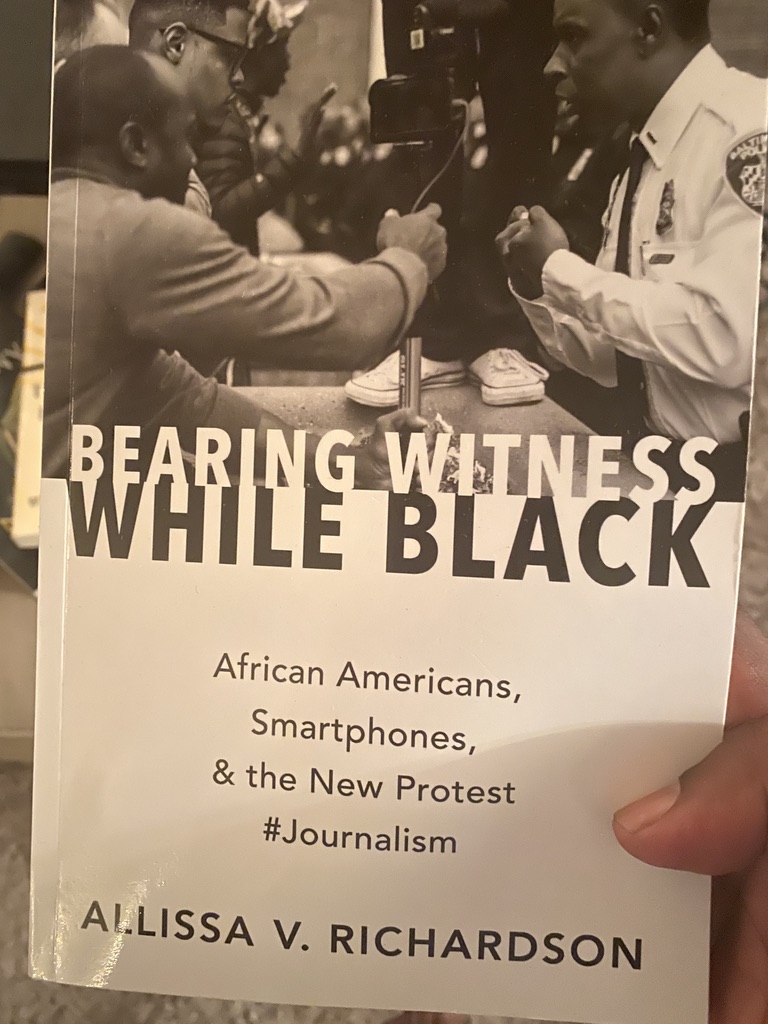
Now, as Dr. Allissa Richardson says in her book Bearing Witness while Black (Oxford Press, 2020), their witness provides a greater picture of the truth…with their smartphones and social media. they provide a counter narrative to the myth of American meaning. They, like Luke, “decide, after investigating everything carefully from the very first, to write an orderly account for” us.
They tell us of Tulsa, Oklahoma in 1921…
They tell us of the barring of federally backed loans and mortgages to black people in the 1930s…
They tell of the denial of rights to testify against whites in the courtrooms in the South…
…and of the denial of economic opportunities in the North.
They tell us of the long standing systematic police brutality and systematic injustice before the law…
…and that justice was never completely blind….she always saw color.
Yet, they tell us of a still bright hope that we can change to include the wide witness of every voice on the society. Experiencing the world through a new set of witnesses just might get us a glimpse of the vision of truth. And we will all be better for it.

 visionsoftruth
You must be logged in to post a comment.