Monthly Archives: June 2020

Overcoming the Pilate Problem

So when Pilate saw that he could do nothing, but rather that a riot was beginning, he took some water and washed his hands before the crowd, saying, “I am innocent of this man’s blood; see to it yourselves.”(Matthew 27:24)

Hand washing…

Pontius Pilate, was the Roman governor of Judea from approximately 26-36 CE; roughly the time of Jesus life and ministry. Pilate, by most accounts was a Roman knight who, through obedience and faithfulness to the emperor, sought higher status in the Roman empire. He worked up through the ranks from courtesan to prefect in the “troubled” prefecture of Judea. His place in history was cemented in that he presided over the trial and crucifixion of Jesus.

While Pilate is one of the few verifiable (by Western standards) historical figures in the New Testament, his last years after the pivotal Good Friday “incident” remain a mystery. However, his behavior in the trial provides a very important point of reflection for us to consider. 

As we read all of the Gospel writers, we hear that Pontius Pilate is generally a good man, one who follows the law and seeks the peace. After all, you cannot advance in the imperial ranks if you preside over dysfunction. The text is clear, when Jesus is brought to him, Pilate examines him and “finds no fault with this man”. He attempts to do what he can under Roman law to set the man, Jesus, free. And it is that action that creates the problem. For the text tells us that when Pilate pushes against the crowds wishes, that’s when he has to face their anger. 

Pilate crumbles in the face of the aggression of the crowd. At the moment of greatest need for leadership; for the rule of law, and the establishment of reason for the innocent, Pilate “washes his hands”. 

This is what I call, “the Pilate Syndrome” or “the Pilate Problem”.

This is a problem and malady that has faced many people throughout history. Its a curious condition that strikes well meaning, good spirited, law abiding, and even bible thumping people. It strikes usually at the moment of greatest need and in the most specific of circumstances. Usually when there is a distinctly moral dilemma facing the individual or the leader, the Pilate Problem sways them to ignore the decision of greatest moral clarity and instead capitulate to the position of neutrality and contrived ignorance.  
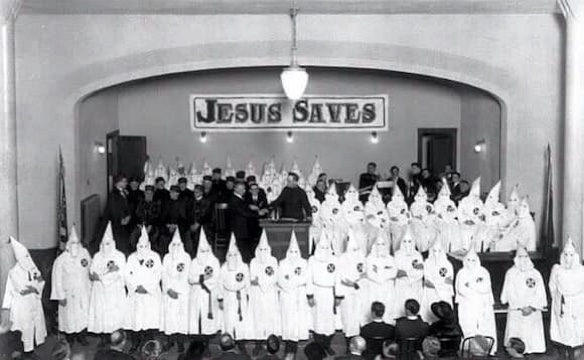
KKK meeting from the 1920s (location unknown)

For America, white supremacy and its lattice work of socio-political support are the moral decision of our day. Throughout the 244 year history of the republic and the near 400 year history of Black people on the continent, the racial construction of whiteness and Blackness have been the moral dilemma of every major historical figure in power. From Thomas Jefferson’s Notes on the State of Virginia, to Lincoln’s Second Inaugural Address, to President Wilson’s resegregation of federal offices to the current president’s speech on Charlottesville, leadership in America (primarily of white persons), have exhibited all the symptoms of the Pilate Problem.

(You know, I could make a case about how this malady may inflict those who also look like Pilate, but perhaps that is just mere coincidence.)

Whether it is “hand washing” or #whitesilence, the problem is still the same. There comes a time when those in positions of authority, are called to address the moment, to speak to the crowds and lead. Pilate refused to lead for fear of his future governmental appointment. Leaders in white institutions, structures and organization have also refused to lead for similar reasons. 

Perhaps the Good News is simply this: the key to overcoming the Pilate Problem is not just in Pilate’s hands (clean though they may be). Its in Jesus’s witness. For you see what makes Pilate a historical figure and one who becomes the exemplar of inaction and impotence, is the clear eyed, stiff backed, brown man with curly hair named Jesus. The innocent man condemns the governor to the historical books as a coward who is afraid of the governed and afraid to stand up for justice. Jesus’ witness reveals the cowardice of Pilate’s position.

In our current day, it is the ongoing witness of hundreds of thousands of stiff backed, clear-eyed multicolored protestors across the country, standing up to America’s historical pathology of the Pilate Syndrome that has finally caused movement. Shame is part of the regimen for treating the Pilate Syndrome. Companies, governments, and even “Karens” all over the country are shamed into doing what is right. And while this isn’t the ideal, it is the start of the hard cure.

The only panacea for this condition is bravery in the midst of befuddlement; morality in the midst of malaise, and leading when you are all alone in the crowd. The more that we all speak through our witness, the more the we can see the vision in order to overcome the malaise of this cowardly condition.
Comments Off on Overcoming the Pilate Problem

Filed under Uncategorized

Conversations that Matter: Perspective on Being a White Ally

Visions of Truth Episode: Perspectives on Being a White Ally

Comments Off on Conversations that Matter: Perspective on Being a White Ally

Filed under Uncategorized

The Other Witnesses…

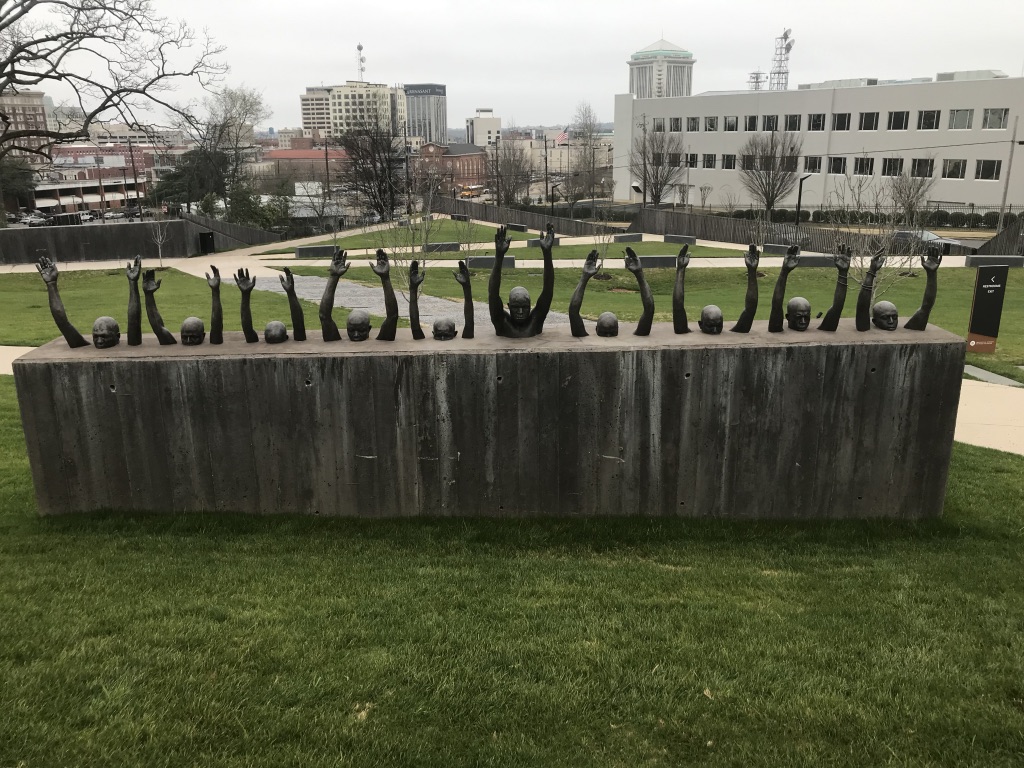
The National Memorial for Peace and Justice (2019)

Since many have undertaken to set down an orderly account of the events that have been fulfilled among us, just as they were handed on to us by those who from the beginning were eyewitnesses and servants of the word, I too decided, after investigating everything carefully from the very first, to write an orderly account for you, most excellent Theophilus. (Luke 1:1-3, NRSV)

This opening to the gospel of Luke quite succinctly summarizes a fundamental aspect of the Christian faith- witnessing. The gospel writer here conveys two very important characteristics of witnessing. First, witnessing is about receiving information. Here in the text, Luke tells us that “many have undertaken an orderly account of the events….just as they were handed to us”. As a witness, Luke has received information from other sources. That information is from “eyewitnesses” who experienced the events of which they speak. They lived the reality and now have spoken (through their writings) about that reality.

Which leads me to the second characteristic of witnessing- telling others. In the gospel, Luke is quite clear, because he has heard the witnesses witness about what they witnessed, he now will “write an orderly account” of what he witnessed. Passing it along, telling the story, or testifying are part of this second characteristic. For if you have experienced something worth remembering, it might also be worth testifying too…especially if others have been telling their story!

This is the charisma of the Gospel. 

To give witness (testimony) to the work of God in Jesus Christ and be a witness (reception) for the ministry and life of Jesus. It is this charism that every Christian is then swept up into. 

However, witnessing isn’t just a Christian phenomenon. It makes its way into court rooms (due to the Judeo-Christian ethic buried in our governance), our families (just think of Uncle June-bug’s stories about “that one time”), and our society on the whole. Witnesses establish facts, or at the very least, they establish THE story. The more witnesses you have attesting to the same idea, the more the narrative can be shaped around that singular idea.  Its evident in much of how we assemble witnesses to verify a particular view of an event. This is how certain witnesses testify to American exceptionalism, the Christian heritage of the United States, and the “freedom and justice for all”…

Published by Oxford University Press

 But what happens when we silence the witness? What happens to the story that we try to keep alive when it is being countered by witnesses who give testimony to a different reality?

Such has been the case for any minority in the American democracy. African Americans, as the vanguard of ethnic minorities in this country have experienced this silencing of their witness for 400 years. 

Their contributions to nearly every part of the American experiment were muzzled.

Their voices were nullified through systematic white-washing.

Their lives brutally and violently taken in order to keep their eyes, ears, and tongues from witnessing to the falsity of the American credo: all men are created equal.

The nullification of Black witnesses is deliberate and systematic. In the past, it was designed to protect the lie of American exceptionalism and opportunism: America- anyone can make it there. African American witnesses tells us of Jim Crow, lynchings, the KKK, and the continued systematic injustices at the hands of governmental entities. Their stories qualified that “anyone” to only the select few of white skin and wealthy capital. Time and again, however, their voices were systematically silenced and undermined.

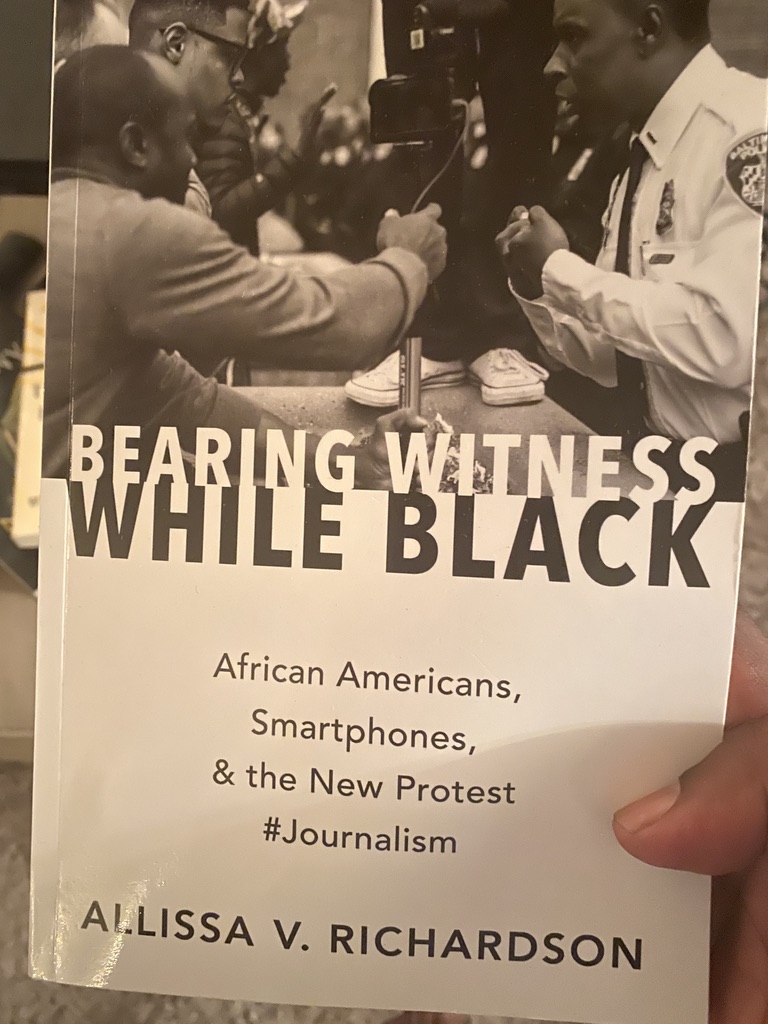
Now, as Dr. Allissa Richardson says in her book Bearing Witness while Black (Oxford Press, 2020), their witness provides a greater picture of the truth…with their smartphones and social media. they provide a counter narrative to the myth of American meaning. They, like Luke, “decide, after investigating everything carefully from the very first, to write an orderly account for” us.

They tell us of Tulsa, Oklahoma in 1921…

They tell us of the barring of federally backed loans and mortgages to black people in the 1930s…

They tell of the denial of rights to testify against whites in the courtrooms in the South…

…and of the denial of economic opportunities in the North.

They tell us of the long standing systematic police brutality and systematic injustice before the law…

…and that justice was never completely blind….she always saw color.

Yet, they tell us of a still bright hope that we can change to include the wide witness of every voice on the society. Experiencing the world through a new set of witnesses just might get us a glimpse of the vision of truth. And we will all be better for it.

Comments Off on The Other Witnesses…

Filed under Uncategorized

Conversations that Matter: The Legacy of Black Witnessing

w/ Dr. Allissa Richardson, USC School of Journalism

Visions of Truth Episode 2: The Legacy of Black Witnessing with Dr. Richardson

Comments Off on Conversations that Matter: The Legacy of Black Witnessing

Filed under Uncategorized

Disturbing the Peaceful…

When he entered Jerusalem, the whole city was in turmoil, asking, “Who is this?”(Matt. 21:10, NRSV)

“Palm Sunday” by John August Swanson

Many editorial writers call it a Triumphal Entry. For many Christians, its the familiar story of Palm Sunday. The disciples retrieve a donkey (older versions say “an ass”) and Jesus rides it into the city. The people of Jerusalem come out to see what is happening and as they do, they shout the words of praise from the psalter: “Hosannah in the highest!”. Its a wonderful scene. 

Its celebratory…

Its powerful…

Its….not quite an accurate portrayal of the text.

You see, the Gospel writers agree that there was an entry into the city. And they agree that he came in on a donkey. The festival that was happening was not about Jesus. There was already a festival going on in the city….the Passover feast was happening in the city. Jesus’ entry was not a continuation of the party, but instead, a crashing of the party. He disrupts the city. Don’t believe me? Matthew says “that the whole city was in turmoil”.  This ain’t peaceful or status quo….Its disruptive. 

Its confusing….

Its unnerving….

Its…..even seismic…. yes, literally, the word in used  for turmoil in Matthew translates “to shake”

The city is shaken with the arrival of this Jesus into the city. He disturbs the status quo. Everything Jesus does in this city from this point in the text forward disrupts, disturbs, and destroys the power structures and status keepers of his day. And that’s the Good News…

In the last few weeks we have bore witness to the kind of social unrest and power struggles that topple governments. The fundamental structures of the American experiment and western democracies are being questioned. At the heart of this questioning is where the power is centered. White silence, elite wealth, and unequal policing are a few of the symptoms of a the disease of white supremacy. An old illness, that has been exacerbated by a pandemic, white supremacy is the second oldest disease of western civilization The first is patriarchy. Now, I’m excited that black and brown people have taken their cues from the 1st century Palestinian black man from Nazareth and rode in on their ass-ets of organizing, collaborating, creativity and resistance. 

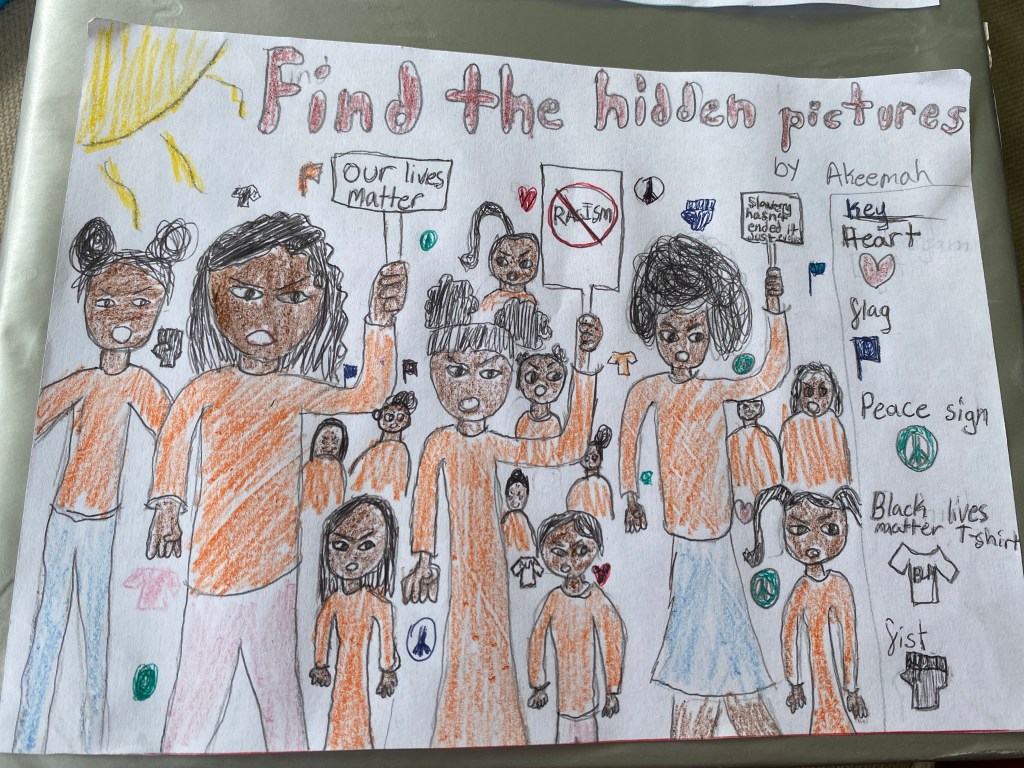
“The Protest: A Taste for Justice” by Akeemah Lee

Protesting is not meant to be peaceful. Its meant to disturb the peace. Disrupt the normative. Undermine the status quo. After all, peaceful doesn’t mean right….it just mean without discord. Some of the most peaceful periods in history were infused with injustice. Do not equate peace with morality….they are not the same thing. #BLM and other groups like it are disturbing the peace and the peaceful.

And for those who make a distinction between peaceful and non peaceful when they see the destruction of property, there is something else interesting in the text. The text says they chopped down palm fronds, (what a mess)! And the disciples even took somebody else’s donkey! They did some damage in their day. Ultimately though, a man would end up dead, due to the actions of the state, and not the city. In our current day, such a display would cause our news media to declare that a peaceful gathering had turned violent….turmoil in the streets.

Ultimately, I hope that we might envision the world as a bit more complex than a false dichotomy of peaceful protest vs. violent resistance. Every protest is meant to disturb the peace. Shake up the norms and unnerve those who have become complacent. If protesting in this vein makes you uncomfortable, perhaps you are in need of disturbance. If you are struggling to understand what is going on, perhaps its time for you to step outside (with a mask on) and see what the turmoil is all about. 

Lets follow the model of our first century forebears and view all who are marching for equality, justice, and liberation from systemic oppression with a hearty “Hosannah! For we are coming to disturb the peace!”

Comments Off on Disturbing the Peaceful…

Filed under Uncategorized

Premier of Conversations that Matter

Comments Off on Premier of Conversations that Matter

Filed under Uncategorized